The Nuts and Bolts of the NPHS Experience
While it was a wonderful to experience JR's teaching style and to interact with the students, this is only one dimension of the overall observation that this past week has yielded. This past week has demonstrated to me that the classroom is indeed multidimensional, from the teacher's pedagogy to the materials students have, from the furniture design to the posters on the walls.
 Each classroom that I observed in seemed to convey a distinct energy. In room 300, where JR taught English 3, this energy, or vibe (as the kids would say), was one of illumination and camaraderie. This room had many windows, which let in a lot of sunlight. Aside from this, I felt that the room was set up in a way that was conducive to learning: the desks were organized in two sets of six rows, with 3 desks to a row. Each of these two sets of rows were facing each other with about a 10 foot gap between them, operating as a central aisle where the teacher may pace back and forth while teaching. There was also a lightweight podium at the front of the class so that a teacher can use it as s/he sees fit. At the back of the room was a teacher's desk, which had a stash of writing utensils and loose-leaf paper. Sometimes, JR would provide students with loose-leaf paper, such as when he had students draft ideas for their manifesto assignments, though it seemed that most students had their own writing materials. This was the only class where I observed JR give materials to students. Unlike many teachers in my experiences, JR does not require students to bring many materials. One student asked what she would need for his class, and he replied "something to write with, and something to write on." As far as technology is concerned, JR brought his students to the writing center, which has both desktop and laptop computers. This is where students finalized their manifestos and submitted them to Google classroom. Despite the fact that students are not assigned individual laptops to use, JR welcomes the use of technology where appropriate, such as using phones to look up information and listening to music while writing and working. This enables students to further use their own resources while giving them freedom they typically have outside the classroom.
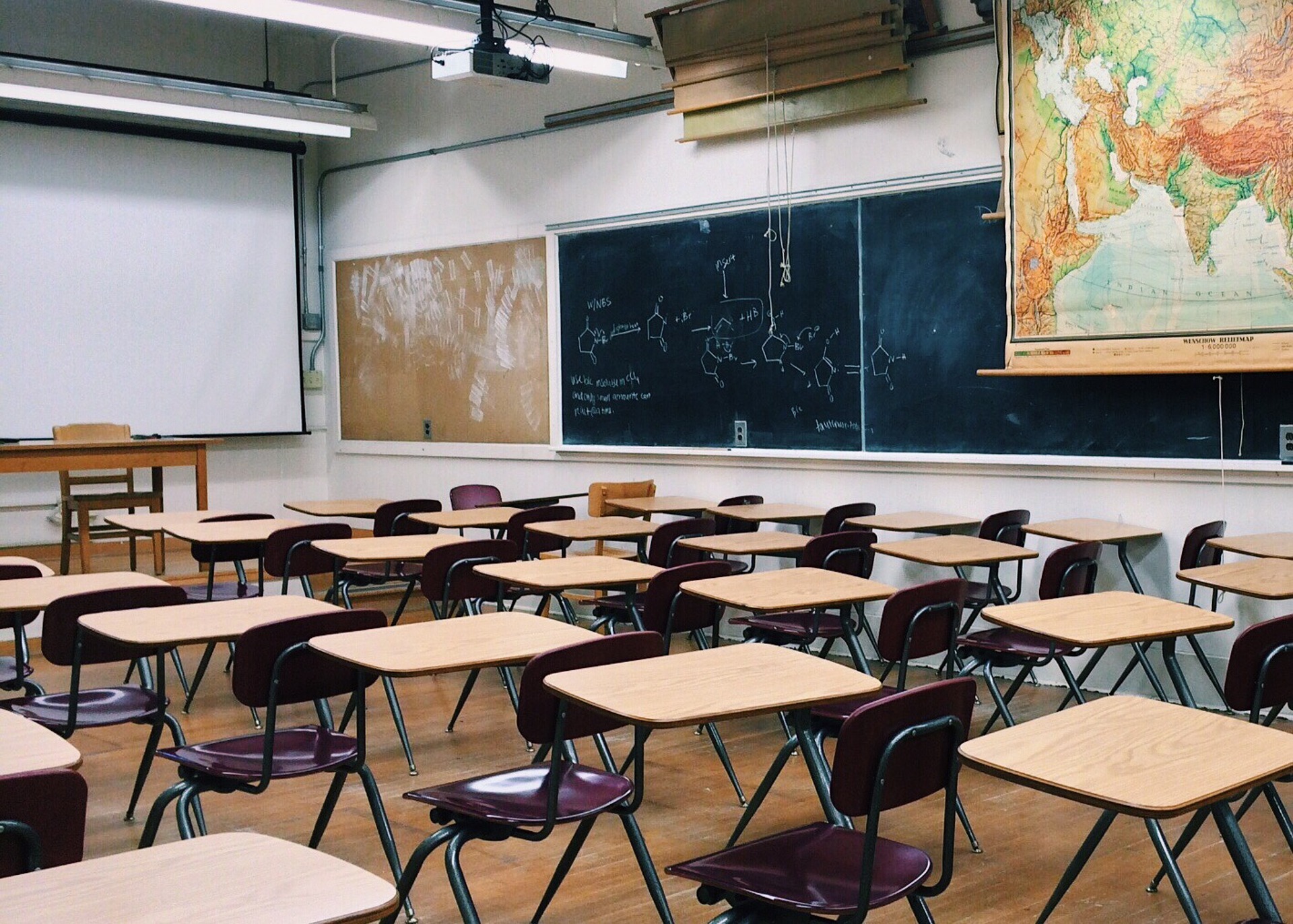 Another room that I observed in was 309, where JR taught Creative Writing. This room had a very different sort of vibe than room 300. Since NPHS doesn't have designated classrooms for many teachers, my coordinating teacher cycled from class to class, similar to a college professor. This class was primarily a history classroom and seemed quite small. The room was always dark, with the lights always being off and with very little sunlight. The teacher that primarily teaches in this classroom also seems to have an unhealthy obsession with Napoleon, seeing as there were two posters and a portrait of this dictator. There were also some pop culture references too, such as Star Wars posters. The desk setup was also quite different, with all the desks being in the traditional row setup with all desks facing the whiteboard. All students seemed to have their own writing materials, for I never observed any students ask JR for supplies, nor did I observe him give any. JR had the students complete an assignment called "28 Awesome Things," which was inspired by a blog he shared via the smartboard. After showing some examples of this, JR brought students to the writing center so that they could use the computers to access Google Classroom, and to use a template for creating a short blog. Once this assignment is completed and graded, JR will compile them and display all 28 of them (hence the name of the assignment, as there are 28 students) in the writing center.
 The final room observed in, room 307, is where JR taught Kingian Nonviolence. This was an especially interesting class to observe because this philosophy is new to me, so it turned out to be a very nuanced learning experience for me. While the desks were set up in a traditional style like room 309, the room was also brightly lit, and with even more materials for students given the fact that there were multiple bookshelves and two teachers desks crammed with paper, pens, and other relevant tools. JR was heavily reliant on the use of the whiteboard in this class, such as the activity where he divided media into different categories, from music to books, and asked students to name some of their favorite forms of a given medium. Once a large list was generated, JR challenged the students to identify some that had no violence whatsoever. There were only two of about fifty that fit this criterion: Sesame Street, and Cloudy with a Chance of Meatballs, which for the students was very eye-opening to how violence is highly saturated in society.
In my ever-evolving pedagogical development, I have consistently been asking myself what behaviors I need to change, adopt, or discard to be the best teacher I possibly can. However, this week made me realize that teaching does not happen in a vacuum, rather one's pedagogical practice, while a large part, is only one part of the very ecosystem of the classroom, which is itself a part of the biome of the entire school. Students are sub/consciously receptive to these many factors, so it is up to teachers to pay attention to all these factors, not just how they teach and behave with students. I believe JR was able to do this masterfully, for he was always eager to supply students with whatever they needed, and always gave them a degree of choice in their access to resources. For example, in one English 3 class, JR expressed that he was thinking of making the class completely paper-free, and he asked students what they thought of the idea. The majority said that they would not prefer that because they felt that complete online work would be distracting, thus they would be less likely to complete their work. This was incredible for me because in giving students a degree of choice, students actually advocated for their own learning, which is something I had never experienced first-hand. This was inspirational, and it seems that in building my classroom community, I'll not only have to consider which parts to put together, but which bolts, screws, nuts, and nails I'll have to use, and where to use them.
Each classroom that I observed in seemed to convey a distinct energy. In room 300, where JR taught English 3, this energy, or vibe (as the kids would say), was one of illumination and camaraderie. This room had many windows, which let in a lot of sunlight. Aside from this, I felt that the room was set up in a way that was conducive to learning: the desks were organized in two sets of six rows, with 3 desks to a row. Each of these two sets of rows were facing each other with about a 10 foot gap between them, operating as a central aisle where the teacher may pace back and forth while teaching. There was also a lightweight podium at the front of the class so that a teacher can use it as s/he sees fit. At the back of the room was a teacher's desk, which had a stash of writing utensils and loose-leaf paper. Sometimes, JR would provide students with loose-leaf paper, such as when he had students draft ideas for their manifesto assignments, though it seemed that most students had their own writing materials. This was the only class where I observed JR give materials to students. Unlike many teachers in my experiences, JR does not require students to bring many materials. One student asked what she would need for his class, and he replied "something to write with, and something to write on." As far as technology is concerned, JR brought his students to the writing center, which has both desktop and laptop computers. This is where students finalized their manifestos and submitted them to Google classroom. Despite the fact that students are not assigned individual laptops to use, JR welcomes the use of technology where appropriate, such as using phones to look up information and listening to music while writing and working. This enables students to further use their own resources while giving them freedom they typically have outside the classroom.Another room that I observed in was 309, where JR taught Creative Writing. This room had a very different sort of vibe than room 300. Since NPHS doesn't have designated classrooms for many teachers, my coordinating teacher cycled from class to class, similar to a college professor. This class was primarily a history classroom and seemed quite small. The room was always dark, with the lights always being off and with very little sunlight. The teacher that primarily teaches in this classroom also seems to have an unhealthy obsession with Napoleon, seeing as there were two posters and a portrait of this dictator. There were also some pop culture references too, such as Star Wars posters. The desk setup was also quite different, with all the desks being in the traditional row setup with all desks facing the whiteboard. All students seemed to have their own writing materials, for I never observed any students ask JR for supplies, nor did I observe him give any. JR had the students complete an assignment called "28 Awesome Things," which was inspired by a blog he shared via the smartboard. After showing some examples of this, JR brought students to the writing center so that they could use the computers to access Google Classroom, and to use a template for creating a short blog. Once this assignment is completed and graded, JR will compile them and display all 28 of them (hence the name of the assignment, as there are 28 students) in the writing center.The final room observed in, room 307, is where JR taught Kingian Nonviolence. This was an especially interesting class to observe because this philosophy is new to me, so it turned out to be a very nuanced learning experience for me. While the desks were set up in a traditional style like room 309, the room was also brightly lit, and with even more materials for students given the fact that there were multiple bookshelves and two teachers desks crammed with paper, pens, and other relevant tools. JR was heavily reliant on the use of the whiteboard in this class, such as the activity where he divided media into different categories, from music to books, and asked students to name some of their favorite forms of a given medium. Once a large list was generated, JR challenged the students to identify some that had no violence whatsoever. There were only two of about fifty that fit this criterion: Sesame Street, and Cloudy with a Chance of Meatballs, which for the students was very eye-opening to how violence is highly saturated in society. In my ever-evolving pedagogical development, I have consistently been asking myself what behaviors I need to change, adopt, or discard to be the best teacher I possibly can. However, this week made me realize that teaching does not happen in a vacuum, rather one's pedagogical practice, while a large part, is only one part of the very ecosystem of the classroom, which is itself a part of the biome of the entire school. Students are sub/consciously receptive to these many factors, so it is up to teachers to pay attention to all these factors, not just how they teach and behave with students. I believe JR was able to do this masterfully, for he was always eager to supply students with whatever they needed, and always gave them a degree of choice in their access to resources. For example, in one English 3 class, JR expressed that he was thinking of making the class completely paper-free, and he asked students what they thought of the idea. The majority said that they would not prefer that because they felt that complete online work would be distracting, thus they would be less likely to complete their work. This was incredible for me because in giving students a degree of choice, students actually advocated for their own learning, which is something I had never experienced first-hand. This was inspirational, and it seems that in building my classroom community, I'll not only have to consider which parts to put together, but which bolts, screws, nuts, and nails I'll have to use, and where to use them.

My CT has a similar classroom set up from the sounds of it (except his desks are two per row around the room in the shape of a horse shoe) but the less desks per row seems to be a quite effective strategy. Another similarity I noticed was the use of phones in classrooms, I agree that this is an effective way to give students freedom in class, as it almost seems to remove the temptation to check your phone when it is "banned" by a teacher. I really liked the multimodel examples you have used in your blog post, as you seem to use them in creative and effective ways that I previously wouldn't have thought to use them in (such as the links you provide to other articles). I enjoyed looking at your post this week, and like that you included how this has made you grow and reflect on various practices.
ReplyDelete